Humanitarian consequences of urban warfare and violence -September 2026
de INTERNATIONAL COMMITTEE OF THE RED CROSS
Watching a city you love fall apart is devastating. When armed conflicts erupt in the middle of urban areas, civilians and the systems they rely on—water, electricity, health care, schools—are placed in grave danger. The humanitarian consequences of urban warfare last for years, often long after the fighting stops.
Today, conflicts are increasingly fought where people live, work, and raise their children. One in six children worldwide grows up in a conflict‑affected area, many carrying physical injuries or emotional trauma into adulthood. Millions of civilians are caught in the crossfire, facing daily risks simply by staying in their homes or attempting to flee.
When cities become battlefields, explosive weapons destroy on a massive scale. Homes, hospitals, and schools collapse into rubble. Water and electricity networks fail. Health systems break down. Entire neighborhoods empty as families flee to safer areas or across borders, creating waves of displacement that reshape societies for generations.
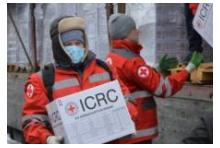
Responding to these immense needs requires a multidisciplinary approach. The ICRC works to prevent, limit, and address the consequences of urban warfare by urging parties to conflict to respect the rules of war and allow humanitarian aid to reach civilians. We provide life‑saving medical care, food, hygiene supplies, and other essentials. We help families separated by conflict reconnect. And we support communities with resilience‑building initiatives—from microeconomic grants to repairs of essential infrastructure.
A major part of our work involves protecting and restoring critical urban services. We repair and rehabilitate damaged infrastructure, supply spare parts, train local service providers, and help authorities develop emergency preparedness plans. Together with partners, we carry out reconstruction projects that create sustainable, long‑term improvements for communities living amid or recovering from conflict.
Even before hostilities erupt, the ICRC engages with authorities and weapon bearers to reduce civilian harm. Through dialogue and legal advocacy, we remind them of their obligations under international humanitarian law: ensuring safe passage for civilians, caring for evacuees and displaced people, providing medical treatment to the wounded, handling human remains respectfully, protecting vital infrastructure, and clearing unexploded ordnance. These measures save lives and reduce suffering when conflict reaches densely populated areas.
You can make a meaningful difference in the lives of people affected by conflict. Thank you for your support.