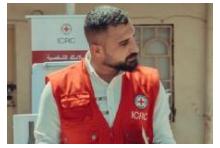
In 2025, despite the immense challenges posed by armed conflict, the ICRC continued delivering protection and essential services across some of the world’s most difficult environments.
In the Democratic Republic of Congo, both parties to the conflict reaffirmed the ICRC’s neutral role in detainee releases and in transporting medicines across front lines. Teams worked to strengthen respect for the medical mission and improve access to essential services, including acting as a neutral intermediary to deliver medicines to otherwise unreachable communities. Since January 2025, the ICRC‑supported hospitals in Goma and Bukavu have remained among the few functioning referral facilities in active conflict zones, treating more than 2,000 war‑wounded patients in just the first two months of the year. To keep these critical structures operational, teams have ensured daily fuel and water deliveries and continued supporting medical evacuations and surgical care across North and South Kivu.
In Sudan, the ICRC engaged the Rapid Support Forces in a high level dialogue on civilian protection and compliance with international humanitarian law. To overcome limited banking access affecting vulnerable households, the delegation introduced Group Cash Transfers—an approach that ensures assistance reaches families while reducing risks and maintaining accountability. In the wider Lake Chad Basin, the AGRILAC project continued to build the resilience of conflict affected agro-pastoralist communities, with an independent evaluation confirming strong results and recommending deeper integration of climate adaptation measures.
In South Sudan, renewed conflict and a rise in weapon wounded patients prompted the redeployment of the Mobile Surgical Team to Akobo Hospital. A special ICRC surgical team joined the annual Field Hospital Training organized by Norvegian RC in Nairobi alongside eight Red Cross National Societies, while global surgical teams participated in the S.T.R.E.A.M. emergency care simulation pilot.
In Ukraine, large scale assistance continued, including regular visits to prisoners of war—though access to POWs in Russia remained blocked despite daily efforts. The ICRC supported POW repatriations, the return of human remains, and safe civilian crossings. A new water pump in Zaporizhzhia restored clean water for 30,000 people, emergency medical kits were delivered for weapon wounded patients, and multipurpose cash grants supported vulnerable households. In the Occupied Territories, families received food and hygiene parcels.
In Gaza, the Rafah Field Hospital operated at 150–200% capacity amid severe access constraints. After hostilities forced a temporary relocation, the office reopened within 10 days and additional staff were deployed. Capacity expanded through new WHO tents for the Emergency Department, upgraded outpatient dressing areas, and a dispensary. The ICRC continued supporting major hospitals, four primary health care centers, and the Artificial Limbs and Polio Centre—the only functioning physical rehabilitation center in Gaza—where multidisciplinary teams provided prosthetic, orthotic, and physiotherapy services.
Across multiple contexts, Water and Habitat operations progressed steadily, including significant advances in Haiti’s Norwegian Red Cross funded and implemented by the ICRC sanitation project.
In Afghanistan, following a 6.0 magnitude earthquake in the southeast, the ICRC—working with the Afghan Red Crescent Society and IFRC—provided clean water, food, medical supplies, solar panels, and cash assistance to affected communities.
In Syria, the ICRC secured regular access in Sweida and expanded its response in water, health, and economic security. Political obstacles continued to prevent rehabilitation of the Allouk water station—the sole water source for Hassake—requiring the ICRC to sustain large scale water trucking for a fifth consecutive year. Eighteen hospitals received emergency support.
In Yemen, health teams provided emergency support for weapon wounded patients and prepared additional surge capacity. Thousands of patients, people with disabilities, were provided necessary medical services in five ICRC-supported physical rehabilitation centers.
In Southern Lebanon, the ICRC supplied ad hoc medical donations to 25 hospitals and resumed hotline based support and financial assistance for weapon wounded patients.
Our neutrality and impartiality allow us to reach areas inaccessible to other organizations, delivering life-saving assistance and advocating for respect of humanitarian law by all parties. Your generosity and steadfast support make this possible.